

Independent contractor compliance is no longer just about having the right to be independent – it's...
As more companies turn to independent contractors to grow quickly, a clear difference is emerging between programs that run smoothly and those that struggle to keep up. Some independent contractor programs are able to scale with relative ease, staying organized, efficient, and predictable even as volume increases. Others, however, become messy and difficult to manage, with inconsistent processes that create frustration for both internal teams and independent contractors over time.
Industries like logistics, last mile delivery, field services, and on demand platforms are helping raise the standard for what good looks like. The strongest programs in these spaces do not simply grow faster, they also maintain consistency, stay compliant, and remain simple for independent contractors to navigate as they scale. That consistency becomes especially important as expectations increase on all sides and operational complexity continues to grow.
What truly separates these high performing programs is not budget size or team headcount, but rather the structure behind how the program is designed and managed. It comes down to having clear processes and systems that are built with intention, rather than patched together as the business grows. The most successful companies treat independent contractor management as a core operational function of the business, not just an administrative task, and as a result, their growth feels more controlled, scalable, and far less chaotic.
Key Elements of a High Performing Independent Contractor Program
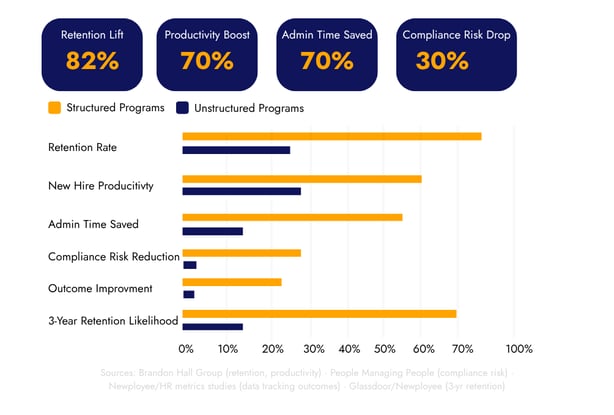
To better understand what separates structured programs from unstructured ones, the infographic below highlights the measurable impact of consistency and process. It compares outcomes across retention, productivity, administrative efficiency, and compliance risk, showing how structured independent contractor programs perform at scale.
A Strong Foundation Built on Structure and Clarity
Strong independent contractor programs are built on one simple idea: clarity from the very start. Agreements are written in plain language that clearly define roles, expectations, and performance standards, so nothing feels confusing or left open to interpretation.
This clarity helps everyone get aligned early in the relationship. Independent contractors understand exactly what is expected of them and how their work contributes to the broader business goals. It also gives businesses a chance to clearly communicate the appropriate business structure for independent contractor relationships, which helps set expectations around compliance, liability, and long term alignment right from the beginning.
Building on that foundation, onboarding is also designed to be thoughtful and structured rather than rushed or improvised. Each independent contractor moves through the same consistent process, which includes document collection, insurance verification, and agreement completion, so that nothing is left unclear or handled inconsistently.
That consistency is what makes the entire system work more effectively. When the process is clear, repeatable, and applied the same way every time, there is far less guesswork involved for both sides. As the program grows, that structure is what makes scaling feel more predictable, more controlled, and significantly easier to manage overall.
Technology That Supports Growth and Visibility
Technology is what allows modern independent contractor management programs to grow without losing control. Instead of relying on a patchwork of disconnected tools, high performing teams centralize everything in one system. This makes it much easier to manage each independent contractor from onboarding through active work.
With centralized data, teams always know:
-
What’s complete.
-
What’s missing.
-
What needs follow up.
Automation plays an important role as well, especially when it is used to handle routine tasks like requesting documents, sending reminders, and sharing status updates, because it reduces the need for manual work while also helping prevent common errors that can slow things down. When these tasks are automated, the entire process becomes more consistent and reliable for everyone involved, which naturally improves how the system functions day to day.
For independent contractors, this creates a smoother and more transparent experience overall, where requirements feel clearer, timelines move more efficiently, and the entire process becomes easier to understand and navigate from start to finish.
Staying Ahead on Compliance
Compliance is not something you check off once and move on from, it is an ongoing responsibility that requires consistent attention and active management over time. Strong programs regularly monitor documents, insurance coverage, and agreements to ensure everything stays current and aligned with requirements.
When issues come up, such as missing paperwork or expired documentation, they are identified quickly and addressed before they have a chance to escalate into larger problems. Catching these issues early helps reduce risk and prevents small oversights from turning into costly disruptions that impact operations.
High performing programs also make it a priority to stay current with regulatory changes that affect independent contractor relationships and business structure requirements. By paying close attention to how rules and regulations evolve, companies and vendors can adapt early and avoid being caught off guard. This proactive approach gives businesses greater confidence as they grow and scale their programs. It also helps minimize unexpected compliance issues that can slow operations or interrupt momentum, making growth feel more stable and predictable over time.
Focusing on the Independent Contractor Experience
The experience of an independent contractor has a direct impact on performance, efficiency, and long term retention across an independent contractor network. When onboarding is clear and well structured, independent contractors are able to get started more quickly and feel confident in what they are doing without needing constant clarification. That early sense of clarity helps set the tone for a more productive and reliable working relationship over time.
Self service tools also play an important role in creating a better overall experience for independent contractors. They provide greater control and visibility into key processes, while at the same time reducing friction and administrative burden for internal teams who manage the program.
Independent contractors can:
-
Upload documents without assistance.
-
Track onboarding progress in real time.
-
Understand requirements without repeated communication.
Automation helps remove unnecessary delays by handling routine steps in the background, while still allowing space for human support when it is actually needed. This balance keeps programs running efficiently without making independent contractors feel like they are navigating the process alone, especially during more complex or time sensitive moments.
When this experience feels smooth and intuitive, it naturally builds on the visibility and control that self service tools provide, creating a more connected and supportive environment overall. As a result, both independent contractors and internal teams benefit from a system that is easier to use and more responsive to real needs.
A better independent contractor experience often leads to:
-
Faster onboarding.
-
Fewer errors.
-
Higher engagement.
-
Stronger retention.
Using Data to Improve
Data plays a critical role in strengthening independent contractor programs because it replaces guesswork with real insight. High performing teams consistently track key metrics across their operations to understand what is working and where improvements are needed. This creates a clearer picture of overall performance rather than relying on assumptions.
The most common metrics teams focus on include:
-
Onboarding time.
-
Compliance rates.
-
Completion rates.
-
Contractor engagement levels.
With this level of visibility, teams are able to make adjustments before small issues turn into larger problems that disrupt operations. Instead of reacting after delays or breakdowns have already occurred, they can respond in real time, which improves efficiency and helps keep everything moving forward in a more consistent and controlled way.
This same access to real time data also helps bring teams into better alignment across the organization. When everyone is working from the same information, decisions become more consistent, communication becomes clearer, and there is less confusion about what actions need to be taken. This shared visibility reduces friction between teams and helps the entire program operate more smoothly and effectively over time.
Keeping Consistency as the Workforce Grows
As independent contractor networks grow, maintaining consistency becomes more challenging, but it also becomes far more important to get right. High performing programs address this by standardizing each step of the process, ensuring that growth does not introduce confusion, gaps, or inconsistent experiences.
In these programs, every independent contractor moves through the same onboarding steps, follows the same compliance requirements, and receives the same clear and reliable communication. There is little room for guesswork or improvisation, which creates a predictable system that is much easier to manage and oversee. It also ensures that independent contractors have a consistent experience, regardless of how many people are added or where they are located.
This level of consistency is what allows programs to scale without sacrificing quality or control. It creates a strong and dependable foundation for long term stability, giving businesses the confidence to continue growing while maintaining a high standard across their entire independent contractor network.
Building a High Performing Independent Contractor Program with Openforce
Openforce brings these best practices together into one connected system by linking onboarding, compliance, insurance verification, and payments in a way that feels logical and easy to follow. Instead of juggling multiple tools and disconnected processes, everything lives in one place, which makes the overall experience more simple and manageable for everyone involved. This approach reduces complexity for both internal teams and independent contractors while creating a smoother and more transparent workflow from start to finish, so there is always a clear understanding of where things stand and what needs to happen next.
With centralized data and built in automation, businesses gain real time visibility into every independent contractor in their network, making it much easier to manage at scale without important details slipping through the cracks. Teams are able to stay ahead of potential issues and address them early, rather than constantly reacting after problems have already developed.
Openforce also helps ensure that independent contractors are set up correctly from the very beginning, including guidance around choosing the right business structure for their work. When everything is connected in this way, businesses can grow with more confidence, knowing they can maintain consistency, support compliance, and deliver a reliable experience as their programs continue to expand.
Learn more about how to build a scalable, consistent independent contractor program!